Spec Battle: Dell Xps 16 2026 vs Lg Gram Book — Is It Worth Upgrading?
Introduction
The laptop market in 2026 has reached a fascinating crossroads where raw power no longer demands a compromise in aesthetics, and extreme portability no longer necessitates a sacrifice in screen real estate. Two of the most prominent contenders in the premium 16-inch category are the Dell XPS 16 (2026 edition) and the LG Gram Book. While both machines target the professional and enthusiast demographics, they represent fundamentally different philosophies regarding what a high-end mobile workstation should be.
The Dell XPS 16 continues its journey as the "fashion-forward" powerhouse, leaning heavily into a futuristic design language characterized by CNC machined aluminum and glass. On the other end of the spectrum, the LG Gram Book remains the undisputed champion of weight management, utilizing magnesium alloy to achieve a chassis that feels almost impossibly light for its size. For buyers looking to upgrade this year, the decision isn't merely about which processor is faster; it is about how the device integrates into their specific workflow, whether that involves high-end video editing on the go or carrying a full-sized office setup between meeting rooms without straining a shoulder.
This article dives deep into the specifications, ergonomic choices, and real-world performance metrics of these two titans. We will analyze the thermal management systems, the display technologies, and the input methods that define the user experience. By the end of this comparison, you will have a clear understanding of whether the premium price of the Dell or the lightweight utility of the LG serves your needs better in 2026.
Detailed Analysis: Dell XPS 16 (2026 Model)
The Dell XPS 16 for 2026 is an evolution of the radical redesign first introduced a few years prior. It remains one of the most striking laptops on the market, featuring the nearly bezel-less InfinityEdge display that has become the hallmark of the series. The 2026 iteration focuses on refined thermal delivery and the integration of the latest neural processing units (NPUs) to handle the surge in local AI applications.
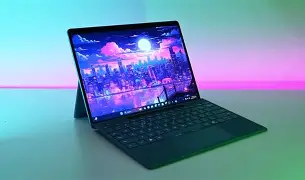
Under the hood, the Dell XPS 16 is built for heavy lifting. It typically features the high-wattage variants of the latest silicon, paired with dedicated graphics processing. This makes it a formidable tool for creative professionals, engineers, and data scientists who require consistent performance during long rendering sessions. Dell has improved the dual-fan cooling system this year, utilizing new vapor chamber materials that allow the laptop to maintain peak clock speeds longer than its predecessors. The aesthetic remains "minimalist-chic," with the invisible glass haptic touchpad and the touch function row that replaces traditional keys. While these design choices have been polarizing, Dell has refined the haptic feedback in the 2026 model to feel more tactile and responsive than the first generation of this design.
Detailed Analysis: LG Gram Book
The LG Gram Book occupies a unique space in the 16-inch market. Traditionally, 16-inch laptops are heavy, desktop-replacement style machines. LG defies this by keeping the weight significantly under three pounds. The "Gram" moniker isn't just marketing; it is a design constraint that LG engineers have mastered. The 2026 LG Gram Book utilizes a specialized magnesium alloy chassis that is both durable and incredibly light.
For the 2026 model, LG has focused on "Pro" features without adding bulk. The LG Gram Book now features improved battery density, allowing for a full workday of use even with the high-resolution OLED screen. Unlike the Dell, which opts for a futuristic but port-limited design, the LG Gram Book retains a more traditional array of ports, including HDMI and USB-A, which appeals greatly to the business traveler who doesn't want to carry a bag full of adapters. While it doesn't usually house the same high-TGP (Total Graphics Power) GPUs found in the XPS, its performance is optimized for productivity, multitasking, and moderate creative work like photo editing or 1080p video projects.
Find top-rated Laptops & Computers products at great prices.
View Offers →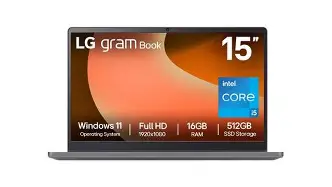
Pros and Cons
Dell XPS 16 (2026)
- Pros: Exceptional build quality with a premium aluminum and glass feel that is unmatched in the Windows ecosystem.
- Pros: High-performance hardware configurations capable of handling 4K video editing and 3D modeling with ease.
- Pros: One of the best OLED display options in the world, featuring high peak brightness and professional-grade color accuracy.
- Pros: Remarkable quad-speaker system that provides deep bass and clear highs, often negating the need for external speakers.
- Cons: The touch-sensitive function row and lack of physical Esc/Delete keys can be frustrating for traditional touch typists.
- Cons: At nearly 4.7 pounds, it is significantly heavier than the LG Gram, making it less ideal for constant travel.
- Cons: Connectivity is limited primarily to USB-C/Thunderbolt ports, requiring dongles for legacy peripherals.
LG Gram Book
- Pros: Incredibly lightweight at approximately 2.6 pounds, making it the most portable 16-inch laptop available.
- Pros: Excellent port selection including HDMI, multiple USB-C, and USB-A, providing great "on-the-go" flexibility.
- Pros: Exceptional battery life that consistently outlasts the power-hungry Dell XPS 16 in productivity tasks.
- Pros: Full-sized keyboard including a dedicated numeric keypad, which is a major boon for accountants and data entry specialists.
- Cons: The magnesium alloy chassis, while durable, has more "flex" than the rigid Dell XPS and can feel less "premium" to some users.
- Cons: Integrated or lower-tier dedicated graphics mean it isn't suitable for high-end gaming or professional 3D rendering.
- Cons: Thermal throttling occurs sooner than on the Dell under sustained heavy workloads due to the thin chassis.
Head-to-Head Specification Comparison
| Feature | Dell XPS 16 (2026) | LG Gram Book (2026) |
|---|---|---|
| Weight | Approx. 4.7 lbs (2.13 kg) | Approx. 2.6 lbs (1.18 kg) |
| Display | 16.3" 4K+ OLED Touch (500 nits) | 16" WQXGA OLED (400 nits) |
| Processor | Latest High-Performance H-Series | Latest Efficiency-Optimized P-Series |
| Graphics | Dedicated High-End GPU Options | Integrated or Entry-Level Dedicated GPU |
| Chassis Material | CNC Aluminum & Gorilla Glass 3 | Magnesium Alloy |
| Ports | 3x Thunderbolt 4, MicroSD, 3.5mm | 2x Thunderbolt 4, 2x USB-A, HDMI, MicroSD |
| Battery | 99.5 Wh (Rapid Charging) | 80-90 Wh (High Density) |
Performance and User Experience
When we look at real-world usage, the Dell XPS 16 is clearly positioned as a "Creation" machine. If you are a freelance cinematographer or a software architect, the XPS 16 offers the burst and sustained performance needed for compiling large codebases or exporting large video files. The screen is a marvel of engineering; the 2026 OLED panel offers 100% DCI-P3 coverage and a 120Hz variable refresh rate that makes every motion look buttery smooth. However, the ergonomics require a learning curve. The capacitive touch row above the keyboard looks beautiful but lacks the tactile feedback many professional developers rely on for shortcut keys.
The LG Gram Book, by contrast, is the "Executive" machine. It is designed for the person who spends hours in spreadsheets, presentations, and emails. The inclusion of a full numeric keypad is a detail often overlooked by high-design brands but celebrated by business users. Typing on the Gram is a more traditional experience, with deep key travel and a familiar layout. While the display is gorgeous, it doesn't quite reach the blinding brightness levels of the Dell, though it remains more than adequate for indoor office environments. The performance is snappy for multitasking—you can have fifty Chrome tabs, a Zoom call, and a large Excel file running simultaneously without an issue—but if you try to render a complex 3D scene, the fans will kick in early and the system will throttle to manage heat.
Buying Guide: Is It Worth the Upgrade?
Deciding whether to upgrade in 2026 depends heavily on what device you are currently using. If you are coming from a laptop produced before 2023, the jump in NPU capabilities alone might justify the cost. Both of these machines include dedicated hardware for AI processing, which significantly speeds up tasks like background blur in video calls, local voice-to-text, and generative fill in photo editing software.
Who should buy the Dell XPS 16?
You should choose the Dell XPS 16 if your work is visually intensive. The combination of a top-tier GPU and one of the finest displays in the industry makes it a creative's dream. It is also for the user who values build quality above all else—the XPS feels like a solid block of metal and glass that will hold up well over years of use. If your laptop sits on a desk 80% of the time but needs to be powerful when you take it to a client meeting, the weight is a fair trade-off for the performance.
Who should buy the LG Gram Book?
The LG Gram Book is for the road warrior. If you frequently find yourself working on airplane trays, in coffee shops, or commuting via public transit, the weight difference is life-changing. It is arguably the best "large screen" laptop for students and business travelers who need the screen real estate of a 16-inch panel but the portability of a 13-inch device. It is also the better choice for those who still rely on legacy USB-A thumb drives or HDMI projectors and want to avoid the "dongle life."
Battery Life and Longevity
In 2026, battery life has become more consistent across the board due to more efficient silicon. However, the LG Gram Book remains the efficiency king. Because it doesn't have to power a massive, power-hungry dedicated GPU and a ultra-high-brightness panel (unless configured so), it can easily cruise through 14 to 16 hours of light productivity. The Dell XPS 16 is more of an 8 to 10-hour machine. While that is still impressive, it means you will likely need to carry the power brick if you have a long day of intensive work ahead.
Shop the latest Laptops & Computers picks on Amazon.
Shop Amazon →Regarding longevity, Dell typically has a slight edge in terms of internal modularity. While both laptops have soldered RAM (a common trend in 2026 to save space), Dell often makes the SSD more accessible for future upgrades. The construction of the XPS is also inherently more rigid, which may survive accidental drops or "backpack crush" better than the ultra-thin panels of the LG Gram.
Conclusion
The "Spec Battle" between the Dell XPS 16 2026 and the LG Gram Book reveals two machines at the peak of their respective categories. The Dell XPS 16 is the "heavyweight" champion in every sense—powerful, robust, and stunningly designed, but demanding a premium in both price and weight. It is the definitive choice for those who need a mobile studio that makes a statement.
The LG Gram Book, however, continues to prove that "bigger" doesn't have to mean "heavier." It is a masterclass in weight engineering, providing a massive 16-inch workspace in a package that weighs less than most tablets with a keyboard case attached. For the vast majority of office workers, writers, and students, the LG Gram offers the more practical day-to-day experience, especially when considering its superior port selection and battery endurance.
Upgrading to either model in 2026 is worth it if you are looking to leverage new AI-driven software or if your current machine is struggling with the thermal demands of modern applications. If you prioritize power and prestige, the Dell XPS 16 is your winner. If you prioritize freedom of movement and ergonomic simplicity, the LG Gram Book is the smarter investment. Both represents the best of what 2026 has to offer, and your choice ultimately comes down to whether you want to carry the power of a workstation or the weight of a notebook.