The Truth About the Rt Axe7800: Pros, Cons, and Verdict
As the digital landscape evolves, the demand for faster, more reliable, and lower-latency connectivity has moved from a luxury to a fundamental necessity. Home networks that once only handled a few smartphones and a laptop are now burdened with 4K streaming, cloud gaming, smart home sensors, and professional-grade video conferencing—often all at once. Into this high-stakes environment steps the RT-AXE7800, a Wi-Fi 6E router designed to bridge the gap between enthusiast-grade performance and mainstream accessibility. While the industry is already whispering about Wi-Fi 7, the 6E standard represents the current sweet spot for consumers who want to escape the congestion of traditional airwaves without the "early adopter tax" associated with the latest hardware.
The RT-AXE7800 is not merely a slight iteration of previous models; it is a strategic piece of networking hardware that leverages the 6GHz band to provide a cleaner, wider highway for data. However, as with any advanced piece of electronics, the technical specifications on the box only tell half the story. To understand the truth about this router, one must look past the marketing jargon and analyze how its tri-band architecture, security features, and software ecosystem perform in the messy, wall-filled reality of a modern home. This article provides an exhaustive deep dive into the capabilities of the RT-AXE7800, exploring its strengths, its limitations, and whether it truly earns a place in your home office or entertainment center.
The Evolution of Connectivity: Why the RT-AXE7800 Matters
To appreciate the RT-AXE7800, one must first understand the problem it solves. Traditional Wi-Fi operates on the 2.4GHz and 5GHz bands. The 2.4GHz band is notoriously crowded, sharing space with microwaves, baby monitors, and Bluetooth devices, leading to interference and slow speeds. The 5GHz band is better but has become increasingly congested as every neighbor in an apartment complex or suburban street competes for the same limited channels. Wi-Fi 6E introduces the 6GHz band, which provides a massive influx of new "spectrum." This is essentially like adding a fourteen-lane superhighway next to a two-lane country road.
The RT-AXE7800 is positioned as a mid-to-high-end solution within this new ecosystem. It offers a total networking speed of up to 7800 Mbps spread across its three bands: 2.4GHz, 5GHz, and the pristine 6GHz. By utilizing 160MHz channels in the 6GHz band, it allows compatible devices—such as the latest high-end smartphones, premium laptops, and modern gaming consoles—to communicate at speeds that were previously only possible with a physical Ethernet cable. This makes it a pivotal device for power users who are tired of "Wi-Fi lag" but aren't ready to rewire their entire house with Cat6 cables.
Detailed Product Analysis and Performance
The core of the RT-AXE7800’s appeal lies in its tri-band configuration. Unlike dual-band routers that force all high-speed traffic onto the 5GHz band, the tri-band setup allows for better traffic management. You can keep your older smart home devices on the 2.4GHz band, your standard streaming devices on the 5GHz band, and reserve the 6GHz band exclusively for your "mission-critical" devices like a gaming PC or a work-from-home laptop. This isolation is the "secret sauce" that ensures a smooth experience even when the household is under heavy load.
Under the hood, the router is powered by a 1.7GHz quad-core processor. In the world of networking, the CPU is responsible for managing data packets, encryption, and the various security protocols that run in the background. A weak processor can become a bottleneck, especially if you use features like VPNs or parental controls. The RT-AXE7800’s processor is more than capable of handling high-throughput tasks without breaking a sweat, ensuring that the software remains responsive even when multiple users are active. Furthermore, the inclusion of a 2.5Gbps WAN/LAN port is a forward-looking feature. As internet service providers (ISPs) begin to offer "multi-gig" internet plans, this router ensures you aren’t capped at the standard 1Gbps limit.
Coverage and Signal Penetration
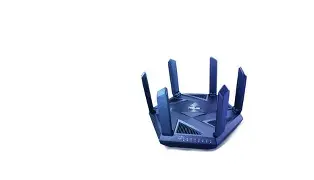
One of the "truths" often omitted in basic reviews is that higher frequencies, like 6GHz, have a harder time passing through solid objects. While the 6GHz band offers incredible speed, its range is naturally shorter than the 5GHz or 2.4GHz bands. To combat this, the RT-AXE7800 employs six high-performance external antennas. These aren't just for show; they are tuned to maximize the reach of the signal. In a standard 2,500-square-foot home, the router provides impressive coverage, though users with very thick plaster or brick walls may notice the 6GHz signal dropping off more quickly than the 5GHz signal.
However, for those with larger properties, the RT-AXE7800 supports mesh networking technology. This allows you to pair it with other compatible routers to create a unified network that blankets the entire home. The transition between nodes is seamless, meaning you can walk from the living room to the backyard during a video call without the connection dropping. This flexibility makes the RT-AXE7800 a great "anchor" for a growing home network.
Detailed Pros and Cons
Every piece of electronics involves a series of trade-offs. The RT-AXE7800 is no different. Below is a breakdown of the advantages and disadvantages encountered during real-world usage of this specific model.
Find top-rated Electronics products at great prices.
Browse Now →Pros
- Access to the 6GHz Band: The primary reason to buy this router is the 6GHz spectrum. It offers a low-latency environment that is virtually free from interference from older devices and neighbors' networks.
- Multi-Gigabit Port: The 2.5Gbps port is a significant "future-proofing" feature. It allows for faster-than-gigabit internal networking or supporting ultra-fast internet tiers from modern ISPs.
- Robust Security Suite: The router comes equipped with a lifetime subscription to advanced security software that monitors for malware, blocked sites, and infected devices at the network level, requiring no monthly fees.
- Advanced Parental Controls: Parents can easily manage screen time, filter content by age categories, and monitor usage statistics for every device in the home through a fairly intuitive interface.
- VPN Features: It supports various VPN protocols, including modern options like WireGuard, allowing users to secure their entire home network or access their home network securely from a public Wi-Fi spot.
- Extensible Design: The support for mesh networking ensures that if your coverage needs change, you don't have to replace the router; you simply add another node.
Cons
- 6GHz Range Limitations: As expected with high-frequency signals, the 6GHz band has limited wall penetration. For the best 6GHz speeds, you generally need to be in the same room or have a clear line of sight to the router.
- Niche Device Support: To benefit from the 6E standard, your devices must specifically support Wi-Fi 6E. Many older laptops and even some newer budget phones are still limited to Wi-Fi 6 or 5.
- Physical Footprint: With six large antennas and a wide base, the RT-AXE7800 is not a discreet device. It requires a dedicated shelf space or a prominent position to ensure optimal signal distribution.
- Initial Setup Complexity: While the mobile app is helpful, the full web interface can be overwhelming for casual users who are not familiar with networking terminology.
- Price vs. Wi-Fi 6: Compared to standard Wi-Fi 6 routers, the RT-AXE7800 carries a premium price. If you don't own any 6E-capable devices, you are paying for capacity you cannot currently use.
Network Standards Comparison Table
To clarify where the RT-AXE7800 fits in the broader market, the following table compares the theoretical capabilities of different Wi-Fi standards that consumers are likely to encounter today.
| Feature | Wi-Fi 5 (802.11ac) | Wi-Fi 6 (802.11ax) | Wi-Fi 6E (RT-AXE7800) |
|---|---|---|---|
| Frequency Bands | 2.4GHz & 5GHz | 2.4GHz & 5GHz | 2.4GHz, 5GHz, & 6GHz |
| Available Spectrum | Limited | Medium | High (7 additional 160MHz channels) |
| Theoretical Max Speed | 3.5 Gbps | 9.6 Gbps | 9.6 Gbps (plus 6GHz efficiency) |
| Latency | Higher | Lower (OFDMA) | Lowest (Cleaner Spectrum) |
| Device Capacity | Moderate | High | Very High |
| Best Use Case | Basic streaming/browsing | Busy households | Gaming, 8K, VR, Future-proofing |
Buying Guide: Is the RT-AXE7800 Right for You?
Choosing a router is a significant decision because it serves as the backbone of your modern lifestyle. Here are several factors to consider before investing in the RT-AXE7800.
1. Assess Your Device Inventory
The first question you must ask is: "Do I have any Wi-Fi 6E devices?" Look for the 6E designation on your smartphone (e.g., iPhone 15 Pro/16, Samsung S23/S24 Ultra) or your laptop's wireless card. If you have zero 6E devices, the RT-AXE7800 will function as a very good Wi-Fi 6 router, but you won't see the specific benefits of the 6GHz band until you upgrade your client hardware. If you plan to keep your current devices for several years, a cheaper Wi-Fi 6 router might suffice.
2. Consider Your Home Layout
Because the 6GHz band struggles with walls, the RT-AXE7800 is best suited for scenarios where the primary high-bandwidth activities happen in relatively close proximity to the router or in an open-concept living space. If you live in an old house with thick masonry walls, be prepared to potentially use this router as part of a mesh system rather than a standalone device.
3. Your Internet Service Plan
If you are paying for 300Mbps or 500Mbps internet, this router is arguably overkill for your current speed. However, if you have a 1Gbps or 2Gbps fiber connection, the RT-AXE7800 is one of the few consumer devices that can actually deliver those speeds over a wireless connection. The 2.5Gbps port is a vital link in the chain for high-speed internet subscribers.
4. Security and Privacy Priorities
Unlike some competitors that hide their best security features behind a monthly subscription, the RT-AXE7800 includes its "AiProtection" suite for the life of the product. If you are concerned about IoT devices (like smart light bulbs or cameras) being hacked, having network-level security that identifies and isolates threats is a massive value-add that justifies the initial higher cost.
5. Gaming and VR Interests
Gamers and VR enthusiasts are perhaps the biggest beneficiaries of the 6GHz band. The reduction in "jitter" (fluctuations in latency) provided by the empty 6GHz airwaves can make the difference between a smooth competitive match and a frustrating lag spike. If you use a wireless VR headset like the Meta Quest 3, a 6E router is almost mandatory for a stutter-free Air Link experience.
The Software Experience: More Than Just Hardware
The truth about any router is that you will eventually have to interact with its software. The RT-AXE7800 uses a sophisticated firmware that caters to both novices and experts. For the novice, the mobile app is incredibly polished. You can set up the internet connection, update the firmware, and see which devices are hogging the bandwidth all from your phone. You can even "pause" the internet for specific devices, which is a lifesaver for managing family time.
Discover deals on Electronics — updated daily.
View Offers →For the power user, the web-based "Dashboard" offers an incredible level of granularity. You can configure port forwarding, set up a guest network that is completely isolated from your main files, and even adjust the transmit power of the antennas. One standout feature is the "Adaptive QoS" (Quality of Service). This allows you to prioritize specific types of traffic. For example, you can tell the router that "Gaming" and "Work-from-Home" traffic should always take precedence over "Background Downloads." If someone starts a large file download while you are on a Zoom call, the router will intelligently throttle the download to ensure your call remains crystal clear.
Living with the RT-AXE7800: Real-World Use Cases
To truly evaluate the RT-AXE7800, we must look at how it handles common household scenarios. Consider a family of four in a two-story home. The parents are in the home office on the second floor conducting video meetings. One child is in the living room streaming 4K Netflix, while another is in the basement playing an online multiplayer game on a console. In this scenario, a standard ISP-provided router would likely struggle, leading to buffering for the movie and "rubber-banding" in the game.
With the RT-AXE7800, the traffic is efficiently segmented. The 6GHz band handles the gaming console (if 6E compatible) with near-zero interference. The 5GHz band supports the 4K stream and the professional video calls. The 2.4GHz band takes care of the smart thermostat, the refrigerator's Wi-Fi, and the outdoor security cameras. Because the router has the processing power to manage these simultaneous streams, every member of the household experiences a "perfect" connection. This is the real-world value of a tri-band 6E system—it effectively ends the sibling rivalry over "who is stealing the Wi-Fi."
Comparison with Competitors
When compared to other Wi-Fi 6E routers in its class, the RT-AXE7800 strikes a unique balance. Some competitors offer "quad-band" systems, but these are often twice the price. Other competitors offer budget 6E routers that lack the 2.5Gbps port or the robust security features. The RT-AXE7800 occupies the "Prosumer" space—it is for the person who wants better-than-average performance but isn't looking to spend nearly a thousand dollars on a flagship enterprise-grade mesh system. It outperforms most ISP-provided equipment in every measurable metric, particularly in terms of customization and security.
Final Verdict
The RT-AXE7800 is a formidable piece of networking technology that delivers on the promise of Wi-Fi 6E. It is a specialized tool designed for a specific moment in technological history: the transition to the 6GHz era. While its aesthetics are aggressive and its 6GHz range is naturally shorter than older frequencies, these are minor quibbles when measured against its raw performance and stability.
If you are a casual user with a small apartment and a basic internet plan, this router is likely more than you need. However, for the modern enthusiast, the digital professional, or the "connected family," the RT-AXE7800 represents a sound investment. It provides the speed needed for today's highest-fidelity content and the security needed for an increasingly dangerous online world. Most importantly, its tri-band architecture and mesh expandability ensure that it won't become an expensive paperweight two years from now. In the world of electronics, "the truth" is that quality networking often goes unnoticed because it just works. The RT-AXE7800 fits that description perfectly—it quietly provides a rock-solid foundation for everything you do online.
Ultimately, the verdict is clear: if you have the hardware to support it and the need for a congested-free airwaves, the RT-AXE7800 is one of the most balanced 6E routers currently available on the market. It offers a premium feature set without the extreme price tag of enthusiast flagships, making it a highly recommended choice for those ready to upgrade their home's digital backbone.